
The Man Who Couldn't Throw
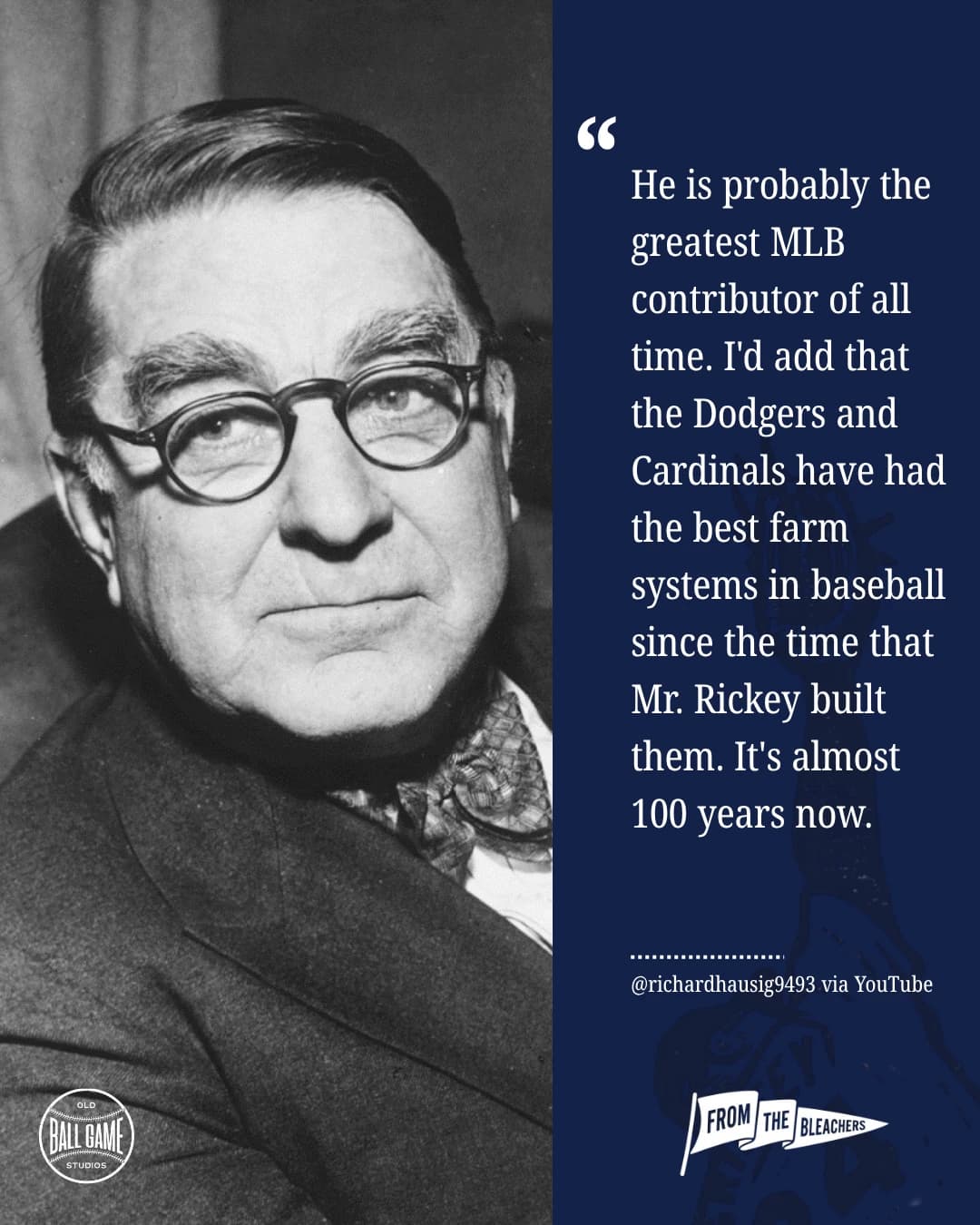
This story was left in our comments by
@richardhausig9493, via YouTube
Count what he changed.
The farm system is his. Starting in 1919, funded in part by selling off their old ballpark, the Cardinals bought controlling interest in minor league clubs in Fort Smith and Houston. Rival owners thought it was a clever way to lose money. Two commissioners' worth of confidants told Judge Landis it would collapse on its own. By 1939 the Cardinals controlled roughly 32 minor league teams and 650 players, and had turned that pipeline into nine pennants and six championships. Every organization in the sport eventually copied it. It is still how baseball works.
32 clubs, 650 players
The Cardinals farm system by 1939 — nine pennants and six championships out of it
The equipment is his too. Batting cages. Pitching machines. Batting helmets, which he required. Sand pits so players could practice sliding without tearing themselves up. Strings stretched across home plate so pitchers could see the strike zone. In 1948 he turned a decommissioned naval base in Vero Beach into Dodgertown and brought 550 players from every level of the organization to train together for eight weeks. Nobody had ever done spring training that way.
Analytics is his. In 1947 he hired Allan Roth, the first full-time statistician any team ever employed. Roth charted every pitch, tracked lefty-righty splits, and told Rickey that batting average concealed more than it revealed and on-base percentage was the number that mattered. That was 1947. Fifty-plus years before anyone called it Moneyball.
And Jackie Robinson.
Here's the part that gets you. The man couldn't throw. Three seasons behind the plate, an arm that quit on him, and by 1914 he was done as a player. He spent the next fifty years changing the sport more than any player who ever put on a uniform.