
The Play That Decided Nothing
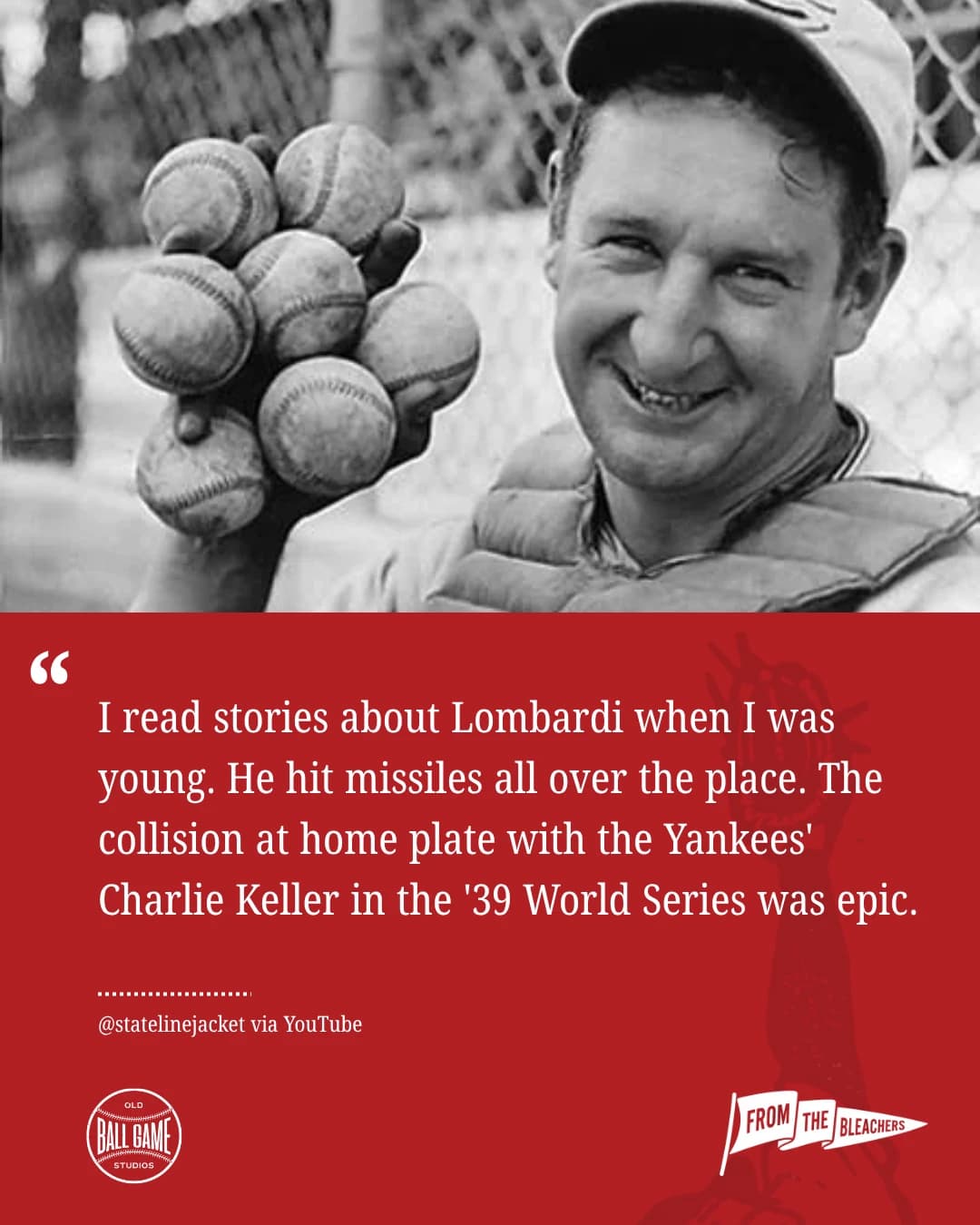
This story was left in our comments by
@statelinejacket, via YouTube
Ernie Lombardi was 6 foot 3 and 230 pounds with hands big enough to palm seven baseballs. He swung a 42-ounce bat and held it like a golf club, hands interlocked, and he hit line drives hard enough that infielders were afraid of him. Bill James called him the slowest man ever to play major league baseball well, which is somehow both an insult and the highest compliment available.
So the league solved him with geometry. Because he could not beat out a ground ball, ever, infielders backed onto the outfield grass, sometimes thirty feet behind the dirt, buying an extra half second to react. Rex Barney, a Brooklyn rookie in 1943, said the first time Lombardi came up he could not believe it, because there was nobody in the infield.
Lombardi's Snooze
what the papers called it — the Yankees were already up three games to none
He hit .306 anyway. Seventeen seasons, ten of them over .300, two batting titles, and he was the first catcher in history to win two. MVP in 1938. He caught both of Johnny Vander Meer's back-to-back no-hitters that June. He also grounded into 261 double plays, one every 25.3 trips to the plate, which is still the record.
Then came October 8, 1939, Game 4 at Crosley Field, tenth inning. DiMaggio singled, the right fielder bobbled it, and Keller came all the way around from first and hit Lombardi in the groin at the plate. He was not wearing a cup. He went down, the ball rolled a few feet away, and DiMaggio never stopped running and slid home while the catcher lay there. The Yankees were already up three games to none. The play decided nothing. The papers called it Lombardi's Snooze and it stuck to him for life.
DiMaggio, standing right there, said for decades that Ernie was wronged, that he had been knocked out cold and it was a lot more than a bump. Keller spent the next spring denying he touched him. None of it mattered. Lombardi grew bitter about being passed over for Cooperstown and died in 1977 without getting in. The Veterans Committee elected him in 1986, nine years too late for him to hear about it.