
Tape and Play Was the Treatment
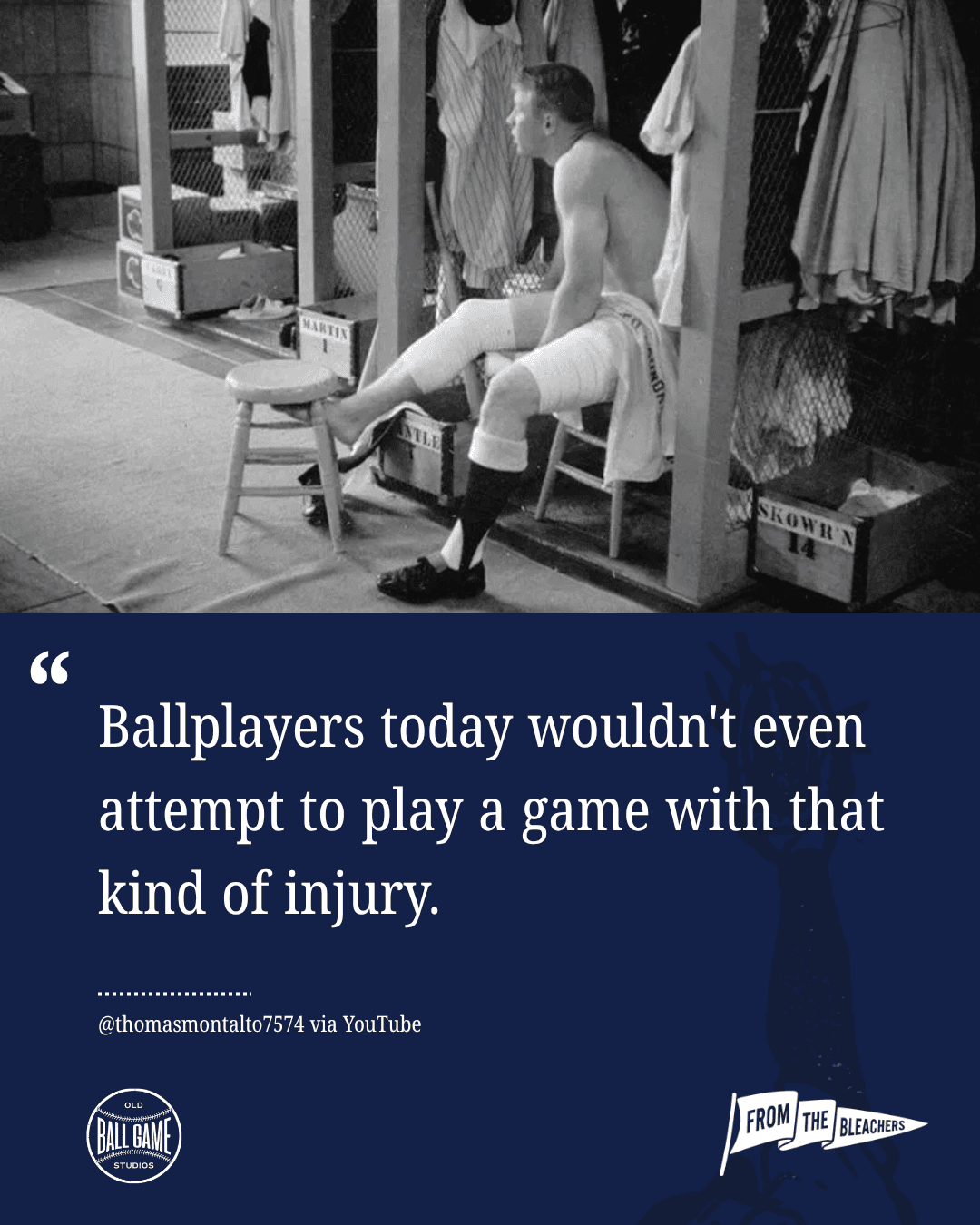
This story was left in our comments by
@thomasmontalto7574, via YouTube
Mickey Mantle was late to the clubhouse for eighteen years because of what it took to get him onto the field.
Both legs, ankle to thigh, wrapped in elastic bandages before every game. That was the routine. By the end of his career, teammates watched him swing a bat and drop to a knee.
17 more seasons
on a knee ligament that was never repaired, torn October 5, 1951
The knee came apart on October 5, 1951. He was 19, playing right field in Game 2 of his first World Series, running down a Willie Mays fly ball. DiMaggio called him off. Mantle hit the brakes, caught his spikes on a drain cover buried in the Yankee Stadium outfield, and went down where he stood. They carried him off on a stretcher. He never had the torn ligament repaired. He played seventeen more seasons on it.
And that wasn't even the first one. At 15, kicked in the shin during football practice in Commerce, Oklahoma, he developed osteomyelitis in the bone. Doctors raised amputation. Penicillin, still close to new, saved the leg.
Here's what's easy to miss about all of it. In 1951 there was no ligament reconstruction worth having. No arthroscope, no rebuilt knee, no twelve-month rehab that gives you your twenties back. Tape and play wasn't the shortcut around the treatment. Tape and play was the treatment. There was also no guaranteed contract, no arbitration, no free agency. A man who sat down might not have a job waiting for him.
A 19-year-old with Mantle's knee today gets it rebuilt and comes back at 20 with a full career in front of him. That isn't a softer game. That's the exact thing every trainer in that 1951 clubhouse would have given anything to offer him.
What he did on those legs was extraordinary. The way to honor it is probably not to wish it on anyone else.