
Baseball Learns to Sell a Ticket
A gate that opened, an umpire who finally called it, a pitcher who beat the moon, and an ending nobody recognized.
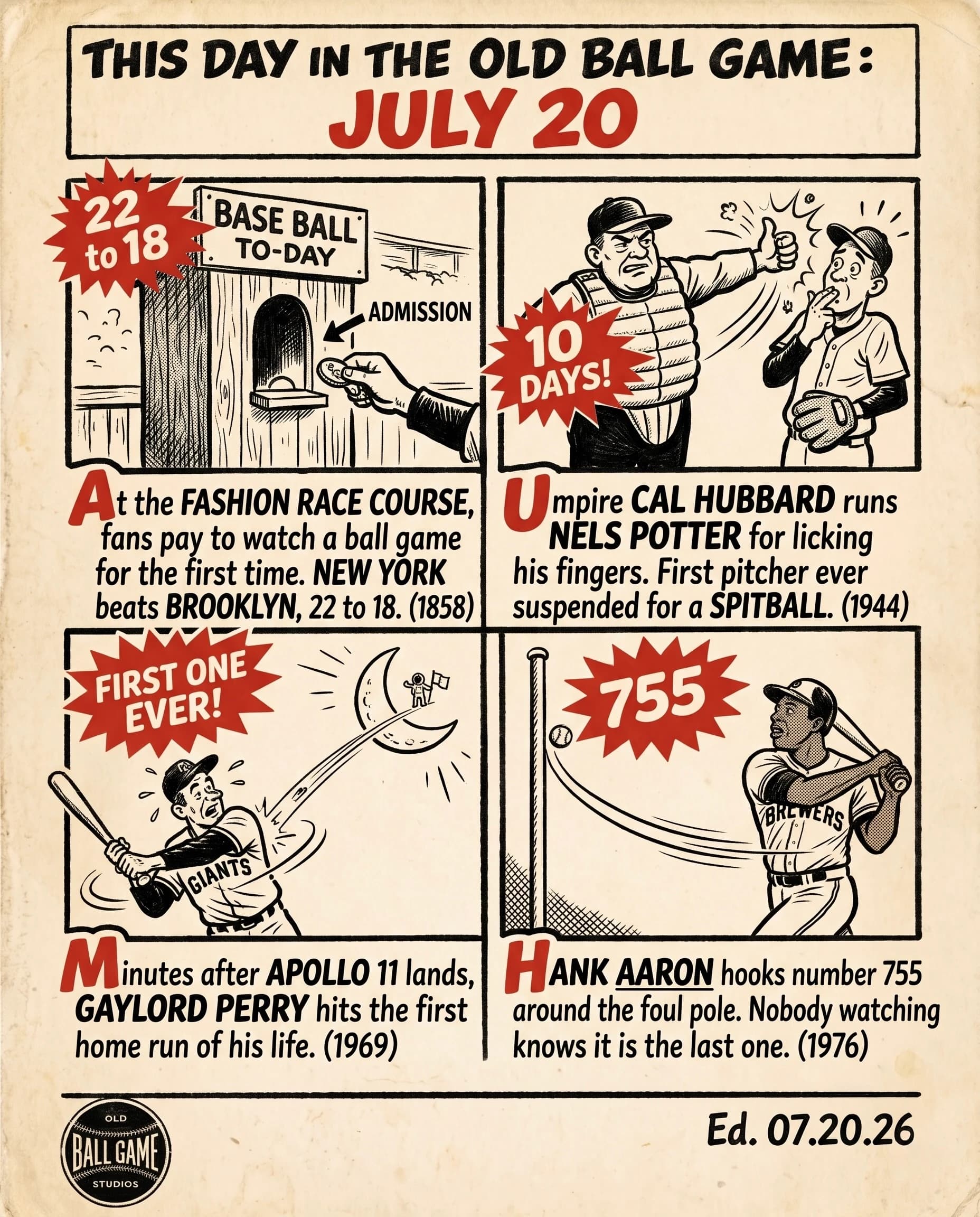
Ed. 07.20.26
Baseball Learns to Sell a Ticket (1858)
All-star nines from New York and Brooklyn met at the Fashion Race Course in Queens. The grounds were enclosed, so somebody could stand at the gate and collect: the first documented admission charge in baseball history. Everything that followed, the ballparks and the contracts and the television money, traces back to a fence and a coin box.
The Umpire Finally Called It (1944)
Browns manager Luke Sewell complained that the Yankee starter was loading up. Umpire Cal Hubbard started watching everybody, including Browns starter Nels Potter, who kept running his fingers across his lips. Hubbard ran him in the fifth, and Will Harridge added ten days, making Potter the first pitcher punished under a spitball ban on the books since 1920. He denied it forever, said he was only blowing on his fingers. The Browns won the game, and that fall, the only pennant they ever won.
Dark's Aside of the Moon (1969)
Apollo 11 touched down at 1:17 Pacific, the Candlestick PA announced it, and 32,560 people stood in silence. Half an hour later Gaylord Perry, a career .131 hitter, hit the first home run of his life off Claude Osteen. A Giants reliever watching the landing on a hidden television heard the roar and assumed it was for Armstrong. The story goes that Alvin Dark once said a man would walk on the moon before Perry homered. Nobody has ever proven he said it. Nobody has needed to.
Number 755 (1976)
Hank Aaron was 42, DHing for a last-place Milwaukee club in front of 10,134 people. Seventh inning, Dick Drago on the mound, and Aaron hooked one inside the left field pole. Nobody in the park knew it was the last one. He played 23 more games and never homered again. A part-time groundskeeper named Richard Arndt got the ball, tried to hand it to Aaron himself, was turned away, and was fired the next day. The Brewers docked five dollars from his last check for the cost of the baseball. Fifty years ago today.